Late on a Sunday night and I am writing in my journal at the kitchen table.
I have just finished “The Sun Also Rises,” the debut novel by Ernest Hemingway which caused such a stir back in 1926. But I was not imressed.
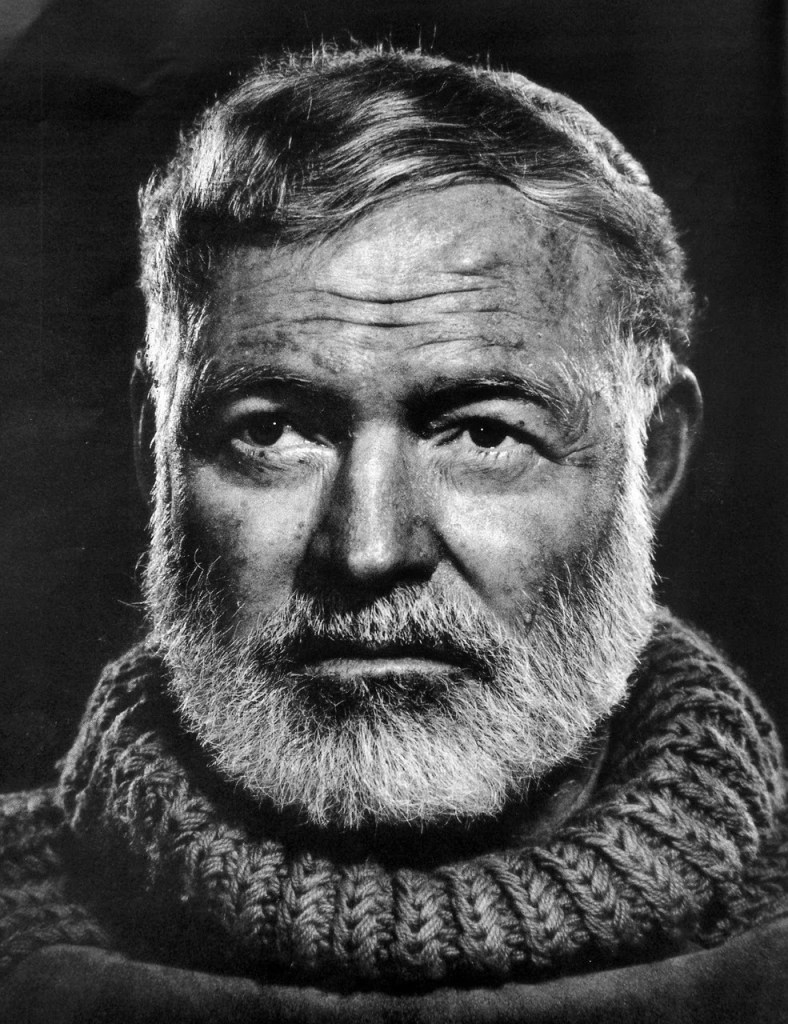
A bearded, ghostly presence is at my shoulder. And he is not happy.
“How could you say this was a rather dull, pedestrian novel?” he says, putting up his fists. “You wanna fight?”
“I don’t fight with ghosts. It’s unseemly,” I said.
“This is one of the great novels of all time!” he says, angry. “All the literary critics say this.”
“Not the first time I’ve disagreed with the literary critics,” I say.
“But it changed American Literature forever!” He says.
“Might be so,” I say. “I can’t change that. But when a reader reads a novel, the novel has to stand on its own terms. Great or not, renowned or not, each reader makes his or her own decision.”
“You’re just an idiot,” he says.
“Not the first time I’ve heard that,” I say. “Though usually it’s coming from my ex-wife.”
“What’s your beef with my great novel?” He asks. “You want more flowery prose?”
“No, I understand why you wrote it in a laconic, plain-speaking style. Though sometimes you do go too far, not really paying attention to what you’re saying. You repeat yourself a lot, and I’m not really sure you meant to do that.”
“Maybe you just don’t like the rich characters. After all, you live a drab, middle-class life,” the ghost of the great writer tells me.
“Well, that’s kind of it,” I say. “It’s hard for me, a man who’s worked all his life and rarely gets to go on vacation, to identify with a group of privileged brats in their 30s who bum around Europe doing whatever the hell they want to. Fishing, Going to Bullfights. Drinking. A lot of drinking.”
“I was just telling the truth,” he said.
“And I respect that,” I answered. “Which is why I finished the novel. But you can’t expect someone like me to be absorbed in the petty games of these pampered white folks.”
“You’re white.”
“But I’m not bumming around France and Spain in my 30s. I was a Public Defender then.”
“Jealous, huh?”
“Could be,” I say. “But I just couldn’t bring myself to care about Lady Whatshername and Jake Barnes and Bill and Robert and whoever that other guy was. They all seemed a bit vapid and empty to me.”
“Exactly! I was capturing the emptiness of the Lost Generation.”
“Mission Accomplished, big guy,” I said.
“Anyway, who are you to criticize what is universally acclaimed to be a great American novel? You’ve never published a novel yourself.”
“Yeah, working on that,” I said. “Anyway, just because I can’t get interested in Lady Brett’s sexual malfunctions doesn’t mean I think I’m better or ever as good as you. As I said, I am a reader. The reader has the right to his or her opinions.”
“How would you have written it, smart guy?”
“Well, for one thing, I would not make the rest of the characters so obscenely anti-Semitic. They really hate that Cohen guy just because he’s Jewish, don’t they?”
“No, they hate him because he’s not one of them.”
“In other words…Jewish.”
He says nothing. He turns his back to me.
“You don’t matter,” he says. “This is my great novel which led to other great novels. Your stupid opinion won’t stop people from reading and admiring my genius forever.”
“It is pretty to think so,” I said, winking.
 Mark Bruce, Writer